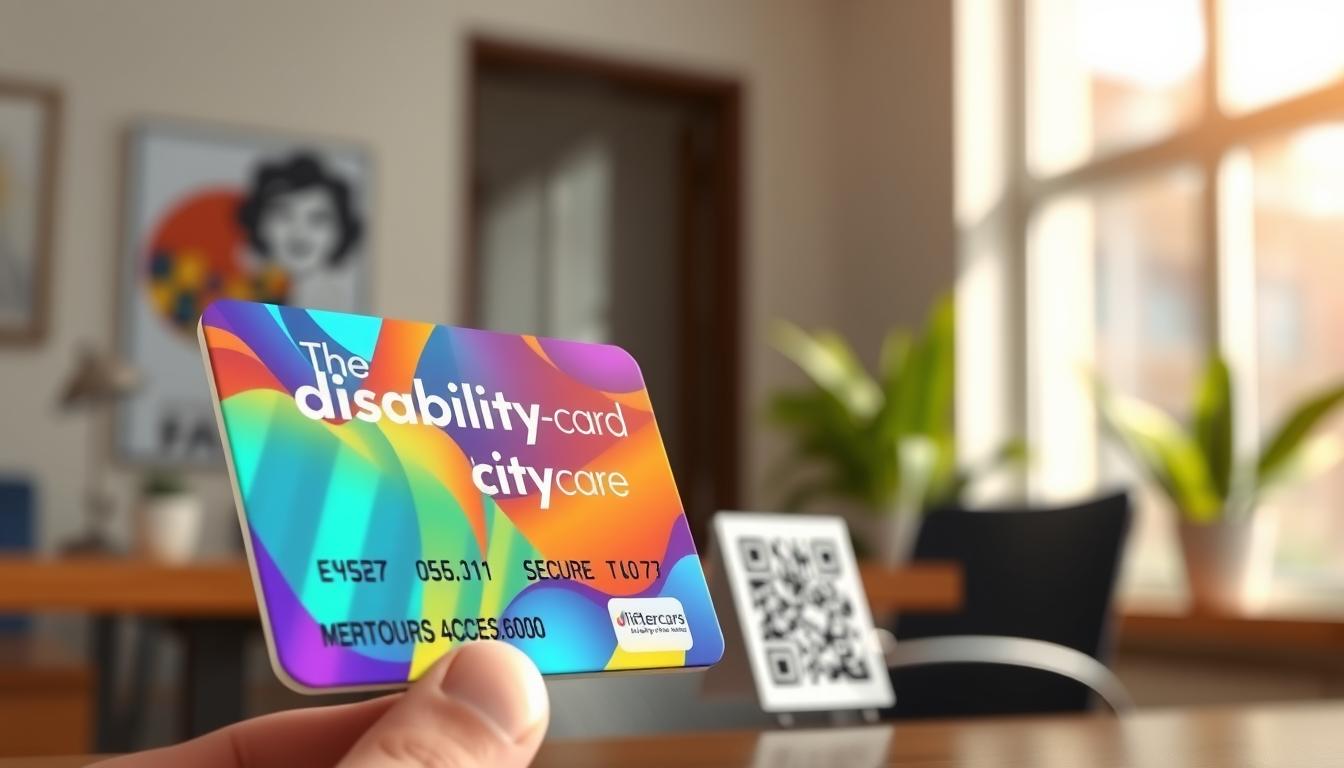
The disability card proves a person needs special help and benefits. It’s very important in the U.S. for getting help and being accepted. The international disability card from disability-card.com is the most recognized and well-liked.
This card is given by government agencies and trusted groups. It shows you can get special parking, cheaper travel, and other help. It makes it easier to get to places like the Social Security Administration and local offices.
Each state has its own card name, like Disabled Card or Disability Permit Card. But they all do the same thing: prove you need help. This guide is for U.S. adults, caregivers, and veterans who need this card to get help.
Disability cards have personal and health info. So, it’s important to know about privacy laws. You should keep your card safe and tell the issuer if it’s lost. The next parts will tell you what a disability card is, who gets one, and the benefits it offers. We’ll also show you how to apply, including what documents you need and tips for a successful application.
What is a Disability Card and Who Qualifies?
A disability card proves you qualify for certain services and benefits. It comes from places like state DMVs and the Social Security Administration. It shows you can get parking, lower fares, or special work places.
Understanding the Disability Card
A disability card is not a medical record. It only shows you qualify, not your health details. People use it to prove they need special access or services.
DMVs give out parking permits for people with disabilities. Transit agencies offer IDs for lower fares. Social Security and VA letters can also prove you qualify for some programs.
Eligibility Criteria for Obtaining a Disability Card
To get a card, you need a permanent or temporary condition. This could be physical, sensory, or mental. The rules follow the ADA or state laws.
You’ll need a doctor’s note or medical records to apply. Some programs also ask for proof of getting SSDI or SSI. Veterans and minors with guardians can also qualify.
Each state and program has its own rules. Some cards are for short-term needs, like after surgery. Others need longer proof or renewal.
Types of Disability Cards Available
- State-issued disabled parking permits and Disabled Card formats for wallets that allow access to accessible parking spaces.
- Transit Disability ID Card and reduced-fare passes from agencies such as MTA, CTA, and regional transit systems for discounted travel and paratransit eligibility.
- Social Security documents and VA letters that act as proof of benefits or disability status for certain services.
- State disability certification card options that let people verify need without disclosing medical diagnoses.
- Special program cards tied to Medicaid, SNAP, or veteran benefits that work alongside a disability permit card for wider access.
Some cards are temporary, while others last for years. Knowing which card you need helps you get the services and benefits you deserve.
Benefits of Having a Disability Card
A disability card makes life easier. It gives you quick access to public programs and travel perks. Always have your card and documents ready for these benefits.
Financial assistance programs
Having a disability card can speed up getting Social Security Disability Insurance (SSDI) and Medicaid. It also helps with SNAP and state cash assistance. You might need it for local utility help and property tax cuts too.
It makes talking to benefits counselors and nonprofits easier. This helps you navigate programs better.
Access to transportation services
Many states let you use accessible parking with a disabled parking permit. But, remember, misuse can lead to fines.
Some transit agencies offer discounts with a disability card. It can also get you free transfers and ADA paratransit services. Show your card for better seating and elevator access, and for Medicaid rides.
Special discounts and benefits
Cardholders get discounts at museums and theaters. Some clinics and pharmacies offer lower fees with a disability card. This includes vision centers and pharmacy assistance programs.
Some cities don’t charge parking fees for people with disability cards. At work or school, it can start talks about ADA accommodations. This includes access to disability services.
Not all places accept every card. Always check first and carry your documents. Misusing disabled parking or lying about your status can lead to legal trouble. Use your card wisely.
How to Apply for a Disability Card
Getting a disability card is easier when you know the steps. First, find out who to contact: it could be your state DMV, a local transit agency, the Social Security Administration, or your state’s health office. Each place has its own forms and rules.
Step-by-Step Application Process
Start by getting the application form from the agency’s website or office. State DMV sites often have forms for disability permits. Transit agencies list what you need for a Disability ID Card and paratransit. A doctor must fill out a form that explains your condition and how long it will last.
Then, send in your application as told by the agency. This could be online, by mail, or in person. Wait for a few days to weeks for a response, depending on the type of card.
Required Documentation
You’ll need a few things: a government ID, proof you live there, a doctor’s note, and any SSDI/SSI letters if you have them. Transit agencies might ask for more, like a letter from a therapist. If you’re a veteran, show your VA disability rating or ID.
For kids, you’ll need a birth certificate and ID from the guardian. Make sure you know what kind of documents are needed before you send them in.
Tips for a Successful Application
Make sure your documents are clear and complete. Use official websites to get the right forms. Keep track of when your card needs to be renewed and what to do if you need to appeal.
Ask for temporary permits while you wait for your application. Always use your card or permit correctly. For example, display parking placards right and carry your Disability ID Card when you’re using transit discounts.
For more help, check out federal and state resources like the Social Security Administration and your state’s DMV or transit agency. Local Independent Living Centers and disability groups can also help with your application or getting the right documents.